This is my latest favourite way to bind off for toe-up socks. There’s a spring built into this bind off that allows it to stretch over the heel when pulling on socks.
And I’ve got to say, I really quite like the zigzag effect when viewed from above.

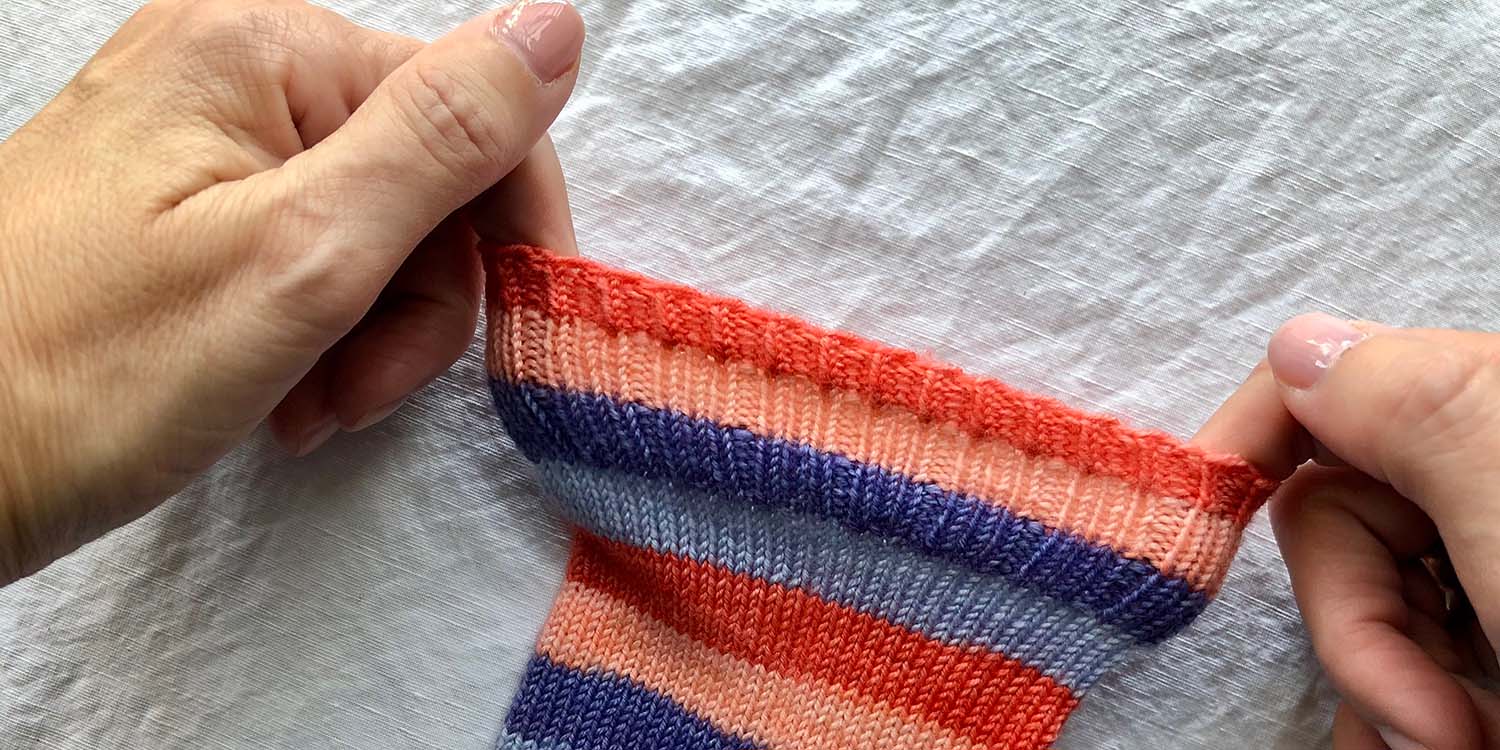
This is my latest favourite way to bind off for toe-up socks. There’s a spring built into this bind off that allows it to stretch over the heel when pulling on socks.
And I’ve got to say, I really quite like the zigzag effect when viewed from above.

Also called German Twisted Cast On, this method is based on the Long Tail Cast On and is a great stretchy cast on to have in your repertoire. This is my favourite cast on for cuff down socks.

When working any cast on that’s based on the Long Tail Cast On method, I have a tendency to do it too tightly. How about you?
If your cast on is tight, going up a needle size or casting on over two needles does not correct the problem.

The big question when working a Long Tail Cast On is how long should that tail be? It’s really frustrating to run out of yarn before the cast on is complete. There are a number of ways to estimate the length of the tail.
The Long Tail Cast On uses two lengths of yarn—a long tail and the yarn coming from the ball.
The Setup
As an aid in the following tutorial, I’ve knotted together two different colours of yarn to help make things a little easier to see.

The Shadow Wrap Short Row method, developed by Alice Yu of the Socktopus blog uses one of my favourite increases—the raised increase, sometimes called lifted increase. One of the reasons the raised increase is my favourite is because it’s the most invisible and that’s also why it lends itself so nicely to this short row technique.

My favourite cast on for toe up socks is a Turkish Cast On. It’s as simple as winding the yarn around your needles and there’s no long tail or scrap yarn to contend with. The photo tuturial that follows walks you through it, step by step.

Spit splicing is one of my favourite ways to join a new ball of yarn when working with wool and wool blends. But what about when you need to join a new colour? I’ve developed this spit splicing technique that can save you so much time weaving in ends.

VIDEO TUTORIAL
Learn how to do my absolute favourite, go-to increase—the raised increase. I use it in almost everything. It’s the least disruptive to the stitches around it and if only a single raised increase is worked, it’s virtually invisible in a ground of stockinette stitch.

For me, the iconic Canadian plaid is reminiscent of lumberjacks, bush parties, high school, and weekends at the lake. I’ve recreated it in knit form using intarsia and slipped stitches. There is no stranding in this stitch pattern.
