How to Swatch Smarter: A Knitting Tip from Experience
Recently, I invited my newsletter readers to tell me what they love to knit — and I was so moved by the thoughtful responses that came in. I expected to gather useful data for future patterns and classes, but what I didn’t expect was the conversations that followed.

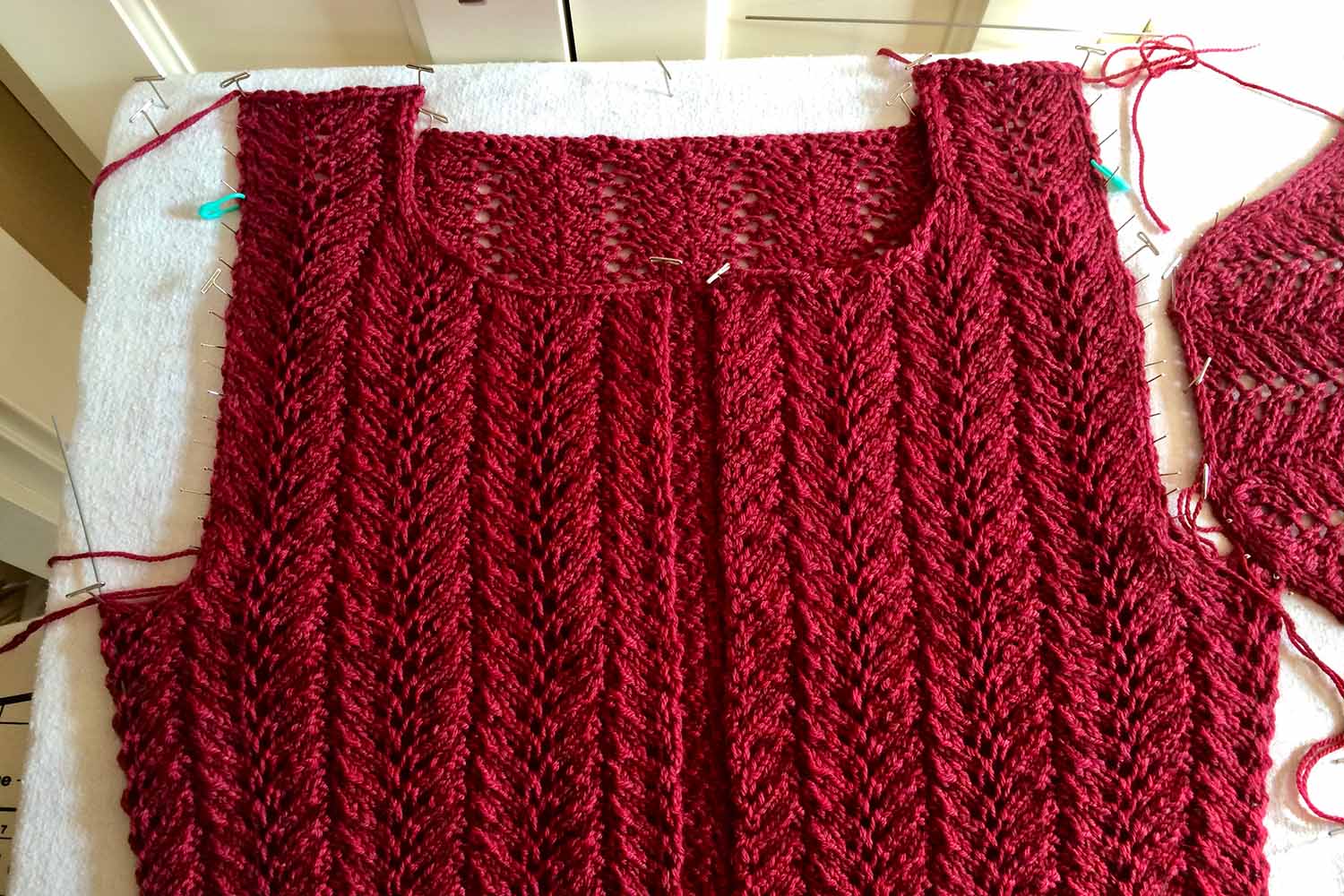
Lisa, one of the knitters who reached out, shared a message that made my day. She told me she had her yarn ready and was about to cast on the Wake cardigan. She also reminisced about a lace cardigan I designed years ago for Vogue Knitting — her first “real” sweater pattern, as she put it. The project had stuck with her all this time.
What followed was a beautiful exchange about learning curves, confidence, and the small mysteries in knitting that sometimes take years to unravel.
Lisa’s message reminded me of my own story behind that cardigan — and the very important lesson I learned while designing it.
Behind the Scenes of a Lace Design
That lace cardigan for Vogue Knitting was my first all-lace design — and I was eager to get everything just right. I dutifully knit a swatch, blocked it, and measured the gauge. With that information in hand, I wrote the pattern, knit the sample, and — as I happened to be the sample size — I tried it on.
And it didn’t fit … it was too small. 😱

So I went back and double-checked everything. I measured the finished cardigan. Then I remeasured the original swatch. Sure enough, the gauge had changed — both in the sweater and the swatch.
The lace had relaxed further after being handled during finishing — during seaming, applying the front bands, and moving it around. My original measurements were no longer accurate. The swatch had lied.
And I’d learned a lesson that would change how I approach swatching forever.
Why Blocking Isn’t the Final Step
Here’s the thing: fibres keep changing after blocking — whether it’s a plant-based yarn like cotton or linen, or an elastic fibre like wool.
When you unpin your swatch and handle it, the tension in the stitches shifts. This is especially true for lace, which is often stretched and pinned during blocking to open up the pattern. Once unpinned, the fabric naturally relaxes — and it can continue to soften and shift with time and movement. What you measure right after unpinning likely will not match what your finished project settles into after some wear and movement.
In my case, I measured the swatch too soon after unpinning. It hadn’t fully “rested” into its final state — and I used those early measurements to calculate and write the pattern. By the time the sample was finished, the fabric had relaxed further, and the actual gauge was tighter than I had planned for. That’s why the cardigan ended up too small.
Since I was working on a deadline, there was no time to reknit the sample. I submitted the pattern and sample to the magazine, along with updated gauge info and a note: the finished sweater was now closer to an XS size, or we could describe it as having a closer fit than originally intended. (Lisa later told me the magazine called it a “close fitting” XS — mystery solved.)
Lisa’s Swatching Revelation
When I shared this story with Lisa, something clicked for her, too. She told me about a cardigan she knit years ago that mysteriously turned out too small — despite checking gauge, blocking, and following all the steps. It had always bothered her. But after reading my story, she realized she might have made the same mistake I did: measuring gauge too soon, before the swatch had truly relaxed.
And here’s the beautiful part — she’s been accidentally doing it “right” ever since. As someone with many works-in-progress, her swatches often sit for a while before the actual project begins. She didn’t know it, but that delay gave her swatches time to settle naturally. In other words, her busy knitting habit was protecting her from heartbreak!
A Better Way to Swatch Lace
So what can you take away from this?
If you’re knitting a lace garment, it’s important to remember that the swatch you block and pin out won’t stay that way. Lace needs to be stretched to open up the pattern, but once unpinned, it relaxes — and continues to shift subtly over time. That’s why it’s critical to let your lace swatch rest before measuring gauge.
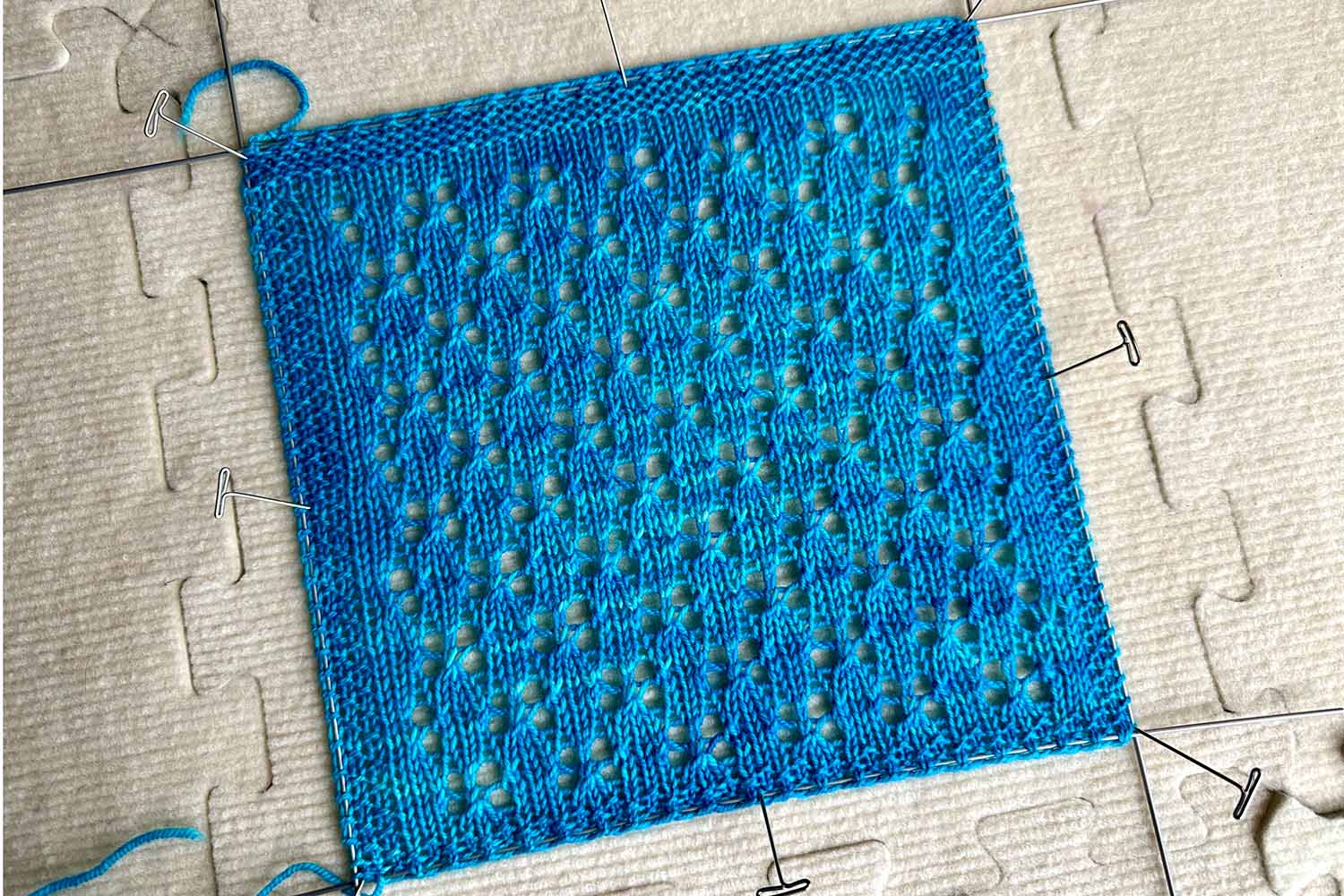
Here’s what I recommend for lace swatches (and really, any time gauge matters):
-
Knit a decent-sized swatch — at least 6×6″ (15 x 15 cm), and larger for lace to get accurate stitch counts.
-
Block it the way you’ll block the finished garment. For lace, this usually means soaking and pinning it out to open the holes.
-
Let it dry fully — then unpin it.
-
Toss it around a bit. Handle it. Fold and unfold it. Mimic the way it might be moved during finishing or worn.
-
Let it rest flat on a smooth surface (not a towel) for a day or two, tossing it around a few times.
-
Then measure your gauge.
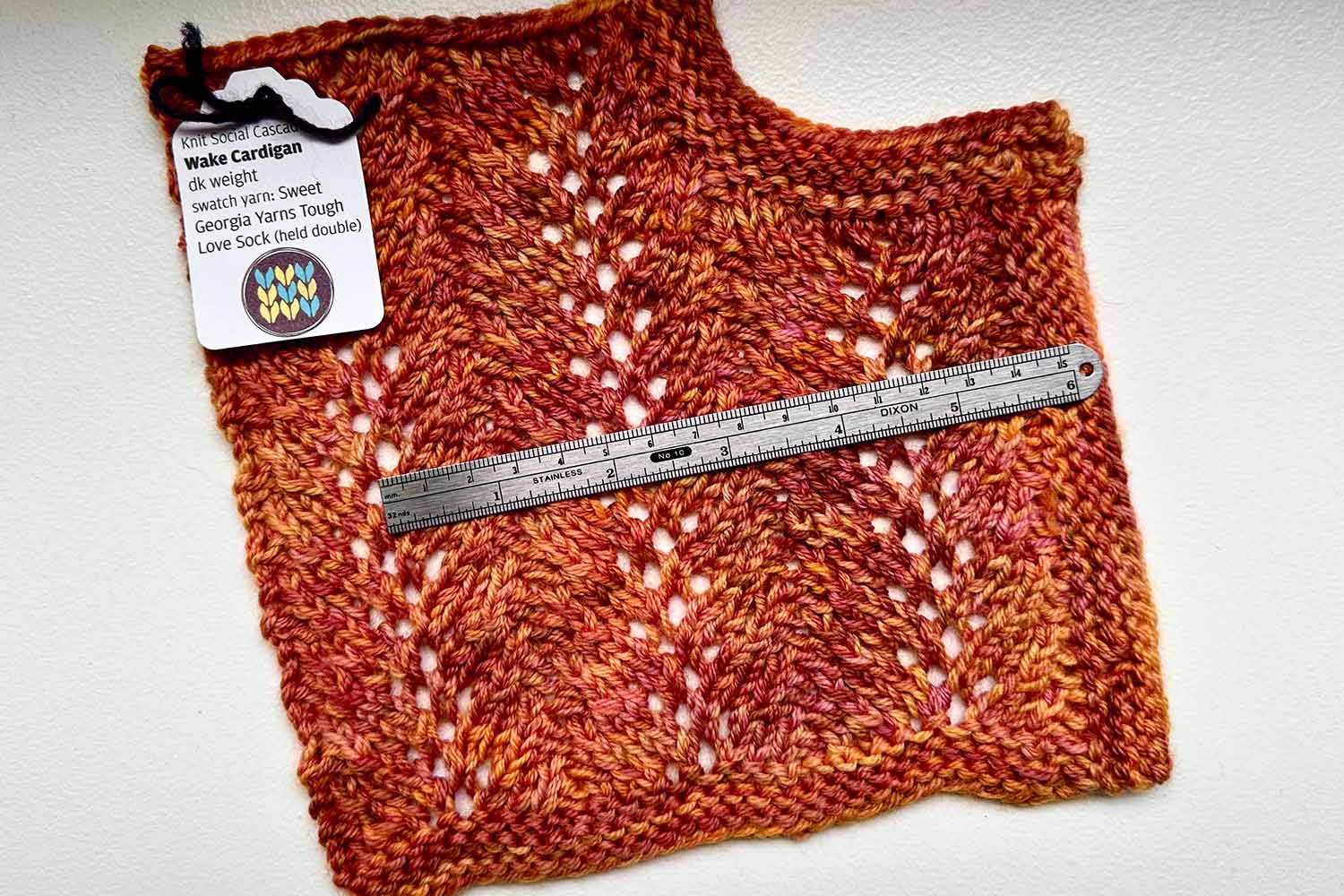
For non-lace stitch patterns, I usually don’t pin out the swatch at all. Instead, I lay it flat to dry after blocking, only pinning if it’s curling uncontrollably. That helps avoid artificially stretching the fabric and gives me a more realistic sense of how it will behave in the finished piece.
Yes, it takes a bit more time. But it can save you hours of knitting — and a whole lot of frustration.
Every Sweater Has a Story
Talking with Lisa reminded me why I love knitting so much. Each piece carries a story — not just in how it looks, but in what it teaches us. That Vogue Knitting lace cardigan was a milestone for me as a designer. It also taught me a lesson I now pass on to knitters at every level.
And, like Lisa said, those early experiences stick with us. I’m grateful she shared hers — and that I could share mine in return.